The Rise of Tier-2 Corporate Hospitals: Job Opportunities in 2026
Posted on 13 Jun 2026
By Dr. Vikas Gupta
Introduction
India's healthcare sector is undergoing a major transformation. While metropolitan cities have traditionally dominated healthcare infrastructure, the next wave of growth is increasingly coming from Tier-2 and emerging urban centers.
Rising healthcare demand, improved insurance penetration, growing medical awareness, and investments in hospital infrastructure are encouraging large healthcare providers to expand beyond major metropolitan regions. As healthcare networks continue adding beds, specialty services, and advanced medical facilities, new career opportunities are emerging across the country.
This trend is particularly important for students and professionals interested in healthcare jobs in tier 2 cities. From hospital administration and healthcare operations to quality management and healthcare analytics, the demand for skilled healthcare managers is growing rapidly.
For healthcare management graduates, Tier-2 cities may become one of the most promising employment destinations in 2026 and beyond.
Why Tier-2 Cities Are Becoming Healthcare Growth Centers
India's healthcare demand is no longer concentrated only in metro cities.
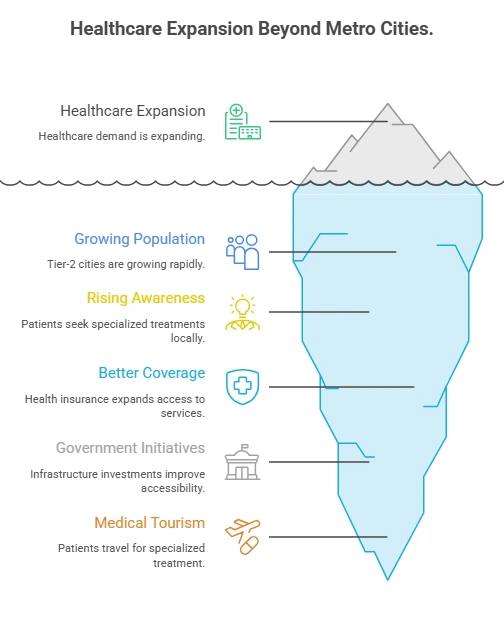
Several factors are driving healthcare expansion into Tier-2 regions:
Growing Population and Urbanization
Many Tier-2 cities are experiencing rapid population growth and urban development.
Rising Healthcare Awareness
Patients increasingly seek specialized treatments closer to home.
Better Insurance Coverage
Health insurance penetration has expanded access to private healthcare services.
Government Healthcare Initiatives
Infrastructure investments are improving healthcare accessibility across regions.
Medical Tourism Within India
Patients increasingly travel to regional healthcare centers for specialized treatment.
These developments are reshaping the healthcare landscape and creating new employment opportunities.
Explore Healthcare Growth
Prepare for emerging healthcare opportunities with industry-focused management education, practical exposure, and leadership development.
Why Corporate Hospitals Are Expanding Beyond Metros
Healthcare providers are increasingly focusing on underserved markets.
Industry reports indicate that major private healthcare networks are adding capacity and expanding operations in emerging cities to meet growing demand. Several expansion plans include new hospitals, bed additions, and investments in regional healthcare infrastructure.
Key reasons include:
Untapped Market Potential
Many Tier-2 cities remain underserved despite growing healthcare demand.
Lower Infrastructure Costs
Operational and expansion costs are often lower compared to metropolitan regions.
Rising Demand for Specialized Care
Patients increasingly seek advanced treatments closer to their hometowns.
Strong Long-Term Growth Prospects
Healthcare organizations view regional expansion as a strategic growth opportunity.
This trend is expected to continue through 2026 and beyond.
Fortis Hospital Expansion 2026 and Industry Growth Trends
One of the major industry developments attracting attention is the continued expansion of large healthcare networks.
Reports indicate that private hospital chains are investing in additional capacity, new facilities, and expanded healthcare delivery networks. Fortis Healthcare has previously outlined plans to increase bed capacity through expansion initiatives, while several leading healthcare organizations continue to strengthen their regional presence.
The broader industry trend suggests increasing investment in healthcare infrastructure, especially in growing urban and semi-urban markets.
For healthcare management graduates, such expansion directly translates into new career opportunities.
Apollo Hospitals Hiring and Regional Expansion
The topic of Apollo Hospitals hiring frequently attracts attention among healthcare management students.
Apollo Hospitals has publicly discussed long-term capacity expansion and bed additions across multiple regions, including a focus on expanding healthcare access and specialty care services. Industry reports indicate that expansion efforts increasingly include emerging cities and regional healthcare markets.
As healthcare organizations scale operations, they require professionals in areas such as:
Hospital administration
Healthcare operations
Quality management
Revenue cycle management
Healthcare analytics
Patient experience management
This expansion creates opportunities for management graduates interested in healthcare leadership careers.
Healthcare Jobs in Tier 2 Cities: What Roles Are Growing?
The rise of regional healthcare infrastructure is generating demand across multiple functional areas.
Hospital Operations Manager
Responsible for ensuring efficient hospital workflows and resource utilization.
This combination makes them valuable contributors during periods of organizational growth and expansion.
How Healthcare Education Supports Career Readiness
The healthcare industry is evolving quickly, and employers increasingly seek professionals with practical knowledge and management capabilities.
Programs focused on healthcare management help students gain exposure to:
Hospital administration
Healthcare finance
Quality management
Healthcare analytics
Leadership development
Healthcare operations
Institutions such as Asia Pacific Institute of Management emphasize industry-oriented learning, practical exposure, corporate interaction, and healthcare-focused management education that prepare students for emerging opportunities across India's growing healthcare sector.
The healthcare industry is expected to remain one of India's strongest employment generators.
Key trends likely to influence hiring include:
Regional Hospital Expansion
Growing investments in Tier-2 healthcare infrastructure.
Digital Health Adoption
Increasing use of technology-driven healthcare solutions.
Specialty Care Growth
Rising demand for advanced treatment facilities.
Healthcare Quality Focus
Greater emphasis on accreditation and patient safety.
Healthcare Analytics
Growing reliance on data-driven decision-making.
These trends create long-term opportunities for healthcare management professionals.
Conclusion
The expansion of corporate healthcare networks into emerging urban centers is reshaping India's healthcare landscape. As investments increase across Tier-2 cities and regional healthcare markets, the demand for skilled professionals is expected to grow significantly.
For students exploring healthcare jobs in tier 2 cities, this transformation offers exciting opportunities in hospital administration, healthcare operations, quality management, analytics, and leadership.
With the continued development of medical hub cities India, the expanding hospital administration scope, and the growth of the provincial healthcare market, healthcare management professionals are well-positioned to play a key role in shaping the future of healthcare delivery across the country.
Shape Healthcare Future
Gain practical management skills to succeed in expanding hospitals, healthcare networks, and emerging healthcare markets.
Dr. Vikas Gupta is a distinguished academic in the education and research domain, specializing in finance and related interdisciplinary studies. He is known for his...
These include hospital administration, operations management, healthcare analytics, quality management, patient experience, and healthcare business development roles.
02.
Why are hospitals expanding into Tier-2 cities?
Growing healthcare demand, urbanization, insurance penetration, and infrastructure development are driving expansion.
03.
What is the hospital administration scope in 2026?
Hospital administration offers opportunities in operations, finance, quality management, patient services, and healthcare strategy.
04.
What are medical hub cities in India?
These are emerging healthcare centers that attract investments in hospitals, diagnostics, and specialized healthcare services.
05.
How does the provincial healthcare market create jobs?
Regional healthcare expansion requires professionals to manage operations, quality standards, patient services, and organizational growth.
06.
Are healthcare management graduates in demand?
Yes. Healthcare organizations increasingly seek professionals with healthcare and management expertise.
07.
Is healthcare management a good career option for the future?
Yes. The healthcare industry’s continued expansion creates strong demand for skilled healthcare management professionals.

















.webp) Call Us
Call Us