Adjusting to PGDM Campus Life: A Guide for Students Moving to a New City
Posted on 28 Aug 2026
By Dr. Vikas Gupta
Introduction
Moving to a new city for a management programme can be exciting, but the first few weeks may also bring unfamiliar routines, new people, academic pressure, and greater personal responsibility. Adjusting toPGDM campus life becomes easier when students prepare for both academic and everyday changes instead of expecting everything to feel comfortable immediately.
For outstation students, the transition involves much more than attending classes. It means learning to manage accommodation, expenses, travel, meals, friendships, study schedules, and independence. Parents may also wonder how their child will adapt away from home. This student guide explains practical ways to settle into a new city, build a supportive routine, participate in campus activities, and make the transition into a PGDM program more manageable.
PGDM Lab Edge Today
Master real-world business analytics tools in modern management labs. Upgrade your corporate skill!
Give yourself time to understand the new city, campus, academic schedule, and daily routine.
Create a realistic budget covering accommodation, food, transport, study materials, and personal expenses.
Build relationships with classmates, roommates, faculty members, and student groups instead of remaining isolated.
Balance academics, networking, campus activities, exercise, meals, and adequate sleep through a structured routine.
Stay connected with family while gradually developing the confidence and independence required for student life away from home.
What Is PGDM Campus Life?
PGDM campus lifeis the overall student experience during a post graduate diploma in management, combining classroom learning with projects, presentations, peer interaction, professional development, clubs, events, networking, and everyday responsibilities. For outstation students, it can also include adapting to independent living, unfamiliar surroundings, new social groups, and a different daily routine.
A PGDM course can require students to work with people from different academic, regional, and professional backgrounds. Unlike a routine centred only on lectures and examinations, management education may involve case discussions, teamwork, presentations, practical activities, and collaborative assignments.
This makes campus adjustment important. Students who become comfortable with their surroundings and routines can devote more attention to learning rather than spending unnecessary energy managing everyday uncertainty. Bonus:stress management for PGDM students
Why Can Moving to a New City Feel Challenging for PGDM Students?
Moving to a new city can feel challenging because several changes happen simultaneously. Students may need to adjust to unfamiliar accommodation, food, transport, classmates, academic expectations, budgeting, and independent decision-making. At the same time, a PGDM program can introduce demanding schedules, collaborative assignments, presentations, and professional activities that require consistent participation.
Homesickness is only one part of the transition. A student may also need time to understand how long commuting takes, where essential services are located, how campus systems work, and how to manage a room or shared accommodation.
The academic environment can feel unfamiliar too. Students entering a post graduate diploma in management may come from different undergraduate disciplines. Some may already be comfortable with presentations and group discussions, while others need time to develop confidence.
Rather than comparing your adjustment with someone else's, focus on gradually building familiarity. Learning the campus layout, creating a dependable schedule, meeting classmates, and understanding academic expectations can make the new environment feel more predictable.
How Should Students Prepare Before Moving for a PGDM Course?
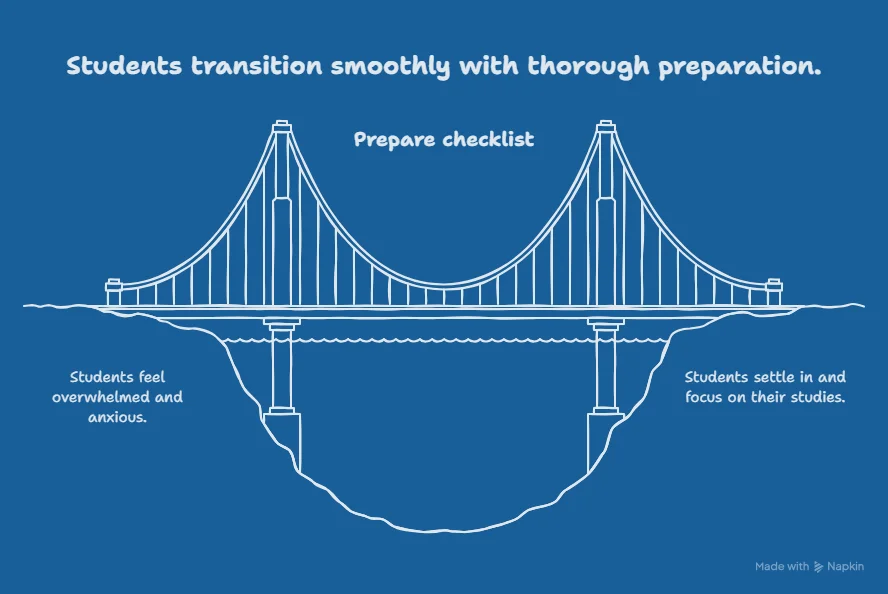
Students should prepare by understanding their accommodation, academic requirements, local transport, essential expenses, documents, and basic services before relocating. A practical checklist reduces uncertainty during the first week and helps students concentrate on settling in. Parents can support this process by verifying essential arrangements without managing every aspect of the student's new routine.
Before leaving home, confirm accommodation rules and what facilities are actually provided. Students living in a hostel, paying guest accommodation, or rented property may need different items, so avoid packing based on assumptions.
Keep important academic and identification documents securely organised. Digital copies stored safely can also be useful where accepted.
Before arrival, identify practical locations such as:
Campus and accommodation
Nearby grocery and daily-needs stores
Public transport points
Banks or ATMs where required
Pharmacies and healthcare facilities
Safe and practical commuting routes
Students exploring PGDM courses in Delhi NCR, for example, should understand that travel times can vary significantly depending on where their institute and accommodation are located. Planning the daily route before classes begin can prevent unnecessary stress.
How Can Students Build a Healthy Routine in the First Month?
A healthy first-month routine should prioritise classes, preparation, meals, sleep, personal responsibilities, exercise, and planned social time. Instead of creating an overly strict timetable, students should establish a few dependable habits. Consistency makes it easier to manage the changing academic and extracurricular demands commonly associated with a full-time PGDM course.
Start with fixed commitments such as classes and scheduled academic activities. Then allocate time for preparation, assignments, group work, meals, exercise, and rest.
A simple weekday routine might include morning preparation, classes, a scheduled study block, campus activities or group work, dinner, and preparation for the following day. Weekends can be used for laundry, shopping, revision, exploring the city, and speaking with family.
Avoid sacrificing sleep every time work increases. Late-night study may occasionally be necessary, but turning it into a permanent routine can make concentration and time management more difficult.
Students should also review their schedule weekly. If assignments repeatedly remain unfinished, social activities consume too much time, or meals become irregular, the routine needs adjustment.
How Can Outstation Students Build Friendships and a Support Network?
Outstation students can build a support network by consistently interacting with classmates, roommates, faculty members, seniors, and student groups. Relationships usually develop through repeated participation rather than one-time introductions. Joining academic teams, clubs, events, discussions, and informal peer activities can help students feel connected while strengthening communication and teamwork skills.
The first few days can feel socially intense because many students are trying to find their group quickly. There is no need to force friendships immediately.
Start with simple actions: sit with different classmates, participate in discussions, introduce yourself during group assignments, and attend orientation or student activities. A PGDM naturally creates opportunities for interaction because teamwork is often part of the learning environment.
Campus relationships can also support professional development. A classmate interested in PGDM in marketing management may approach a business problem differently from someone interested in PGDM in data analytics or banking financial services. Working across interests exposes students to different perspectives.
The objective is not to collect contacts. Build dependable relationships based on mutual respect, collaboration, and genuine interaction. Bonus:PGDM colleges in Delhi NCR
How Should Students Manage Money While Living in a New City?
Students should manage money by creating a monthly budget that separates essential expenses from discretionary spending. Accommodation, meals, commuting, academic needs, phone or internet costs, personal care, and emergency expenses should be considered first. Tracking spending for the first few months helps students and parents understand actual living costs instead of relying on estimates.
Small daily expenses can accumulate quickly in a new city. Food delivery, frequent cab rides, entertainment, subscriptions, and unplanned shopping may appear inexpensive individually but can disrupt a monthly budget.
A practical approach is to divide expenses into three categories:
Fixed expenses: Accommodation and other predictable recurring payments.
Variable essentials: Food, transport, laundry, academic materials, and personal necessities.
Discretionary expenses: Entertainment, eating out, shopping, and non-essential travel.
Students should also maintain an appropriate emergency buffer where possible. Parents and students can agree on how unexpected expenses will be handled, reducing confusion when an urgent situation arises.
Budgeting is not about avoiding every enjoyable activity. It is about knowing what you can spend without compromising essential needs.
How Can Students Balance Academics and Campus Activities?
Students can balance academics and campus activities by treating both as planned commitments while keeping academic priorities clear. A PGDM course may include lectures, case work, presentations, team assignments, competitions, clubs, and professional-development activities. Using a weekly calendar helps students identify deadlines early and participate meaningfully without accepting more responsibilities than they can manage.
Campus activities can contribute to the broader learning experience. Clubs and committees may provide opportunities to practise teamwork, communication, coordination, and leadership.
However, participating in everything is rarely sustainable. Students should select activities that genuinely interest them or help develop useful capabilities.
This becomes particularly important as academic interests become clearer. Students exploring a marketing program may value activities involving communication, branding, sales, or event management. Those interested in big data analytics may prefer analytical competitions, technology-related activities, or data-focused projects.
The specific activity matters less than meaningful participation. One responsibility handled well can provide more learning than several commitments handled poorly.
How Can Parents Support Students Without Limiting Their Independence?
Parents can support outstation students by maintaining regular communication, discussing practical concerns calmly, and remaining available when help is genuinely needed. At the same time, students need opportunities to solve routine problems independently. A balanced approach provides emotional and practical support while allowing them to develop decision-making, budgeting, time-management, and interpersonal skills.
Daily calls may be reassuring initially, but families can gradually find a communication rhythm that works for everyone. Conversations do not need to focus only on grades, attendance, or problems.
Parents can ask about meals, friendships, classes, routines, and how the student is adjusting generally. If a concern involves accommodation, campus procedures, academic policies, or safety arrangements, students and parents should rely on official information from the institution rather than assumptions or informal messages.
For many students, moving away for a PGDM is an important stage of becoming more independent. Support works best when it provides stability without removing every opportunity to make decisions.
What Should Students Do When They Feel Homesick or Overwhelmed?
Students who feel homesick or overwhelmed should maintain familiar connections while actively building a routine in their new environment. Regular meals, sufficient sleep, exercise, conversations with family and friends, and participation in campus activities can provide stability. If distress becomes persistent or interferes with everyday functioning, seeking appropriate professional or institutional support is important.
Missing home during the early weeks does not mean a student is failing to adjust. Familiar surroundings, food, friends, and family have changed at the same time, so adaptation can take time.
Avoid responding by withdrawing completely from classmates or spending every free hour alone. Attend classes, eat with peers occasionally, explore the campus, and create small routines that make the new environment familiar.
Students should also know what support resources their institution provides and how to access them. Asking for assistance early can be more useful than waiting until academic or personal difficulties become harder to manage.
How Can Students Make the Most of PGDM Campus Life?
Students can make the most of PGDM campus life by combining academic discipline with purposeful participation, relationship building, and gradual exploration of career interests. The strongest campus experience is not necessarily the busiest one. It is one in which students learn consistently, contribute to teams, develop practical skills, build meaningful connections, and become increasingly independent.
Whether studying at a PGDM institute in Delhi or elsewhere, use the campus as a learning environment rather than simply a place to attend lectures.
Ask questions in class. Volunteer for responsibilities you can manage. Learn to present ideas clearly. Work with classmates whose perspectives differ from yours. Attend relevant academic and professional activities and reflect on what you learn from them.
Students considering areas such as a post graduate diploma in marketing, PGDM in banking and finance, or PGDM in data analytics can also use projects and peer interactions to explore their interests before making important academic or career decisions.
Most importantly, allow your campus experience to develop gradually. Confidence usually grows through repeated experience rather than arriving on the first day. Bonus: life at a PGDM campus
Conclusion
Adjusting to PGDM campus life in a new city takes preparation, patience, and consistent effort. Students must learn to balance academics with budgeting, accommodation, friendships, health, campus activities, and everyday responsibilities. Building a dependable routine and support network can make this transition easier while encouraging greater independence. Parents can help by staying connected and offering practical support without managing every decision. A PGDM program is not experienced only inside the classroom; the wider campus environment also creates opportunities to practise communication, teamwork, responsibility, and time management. Approach the first few months as a period of learning, adjustment, and gradual confidence-building.
Top PGDM Skill Labs
Gain practical executive exposure with interactive business simulations. Secure admission with us!
Dr. Vikas Gupta is a distinguished academic in the education and research domain, specializing in finance and related interdisciplinary studies. He is known for his...
01.
How long does it take to adjust to PGDM campus life in a new city?
There is no fixed adjustment period because every student’s circumstances are different. Some students become comfortable within a few weeks, while others require longer to adapt to accommodation, academic workloads, friendships, food, and city travel. Establishing a routine and participating consistently in campus life can make the unfamiliar environment gradually feel more manageable.
02.
What should an outstation student carry when moving for a PGDM?
Students should carry essential clothing, academic documents, personal-care items, prescribed medicines where applicable, basic study materials, chargers, and items specifically required for their accommodation. Before packing bedding, appliances, utensils, or furniture, check what the hostel or residence already provides and what its rules permit to avoid carrying unnecessary belongings.
03.
Is PGDM campus life very hectic?
PGDM campus life can be busy because management education may combine classes with presentations, projects, group assignments, events, clubs, and professional-development activities. The workload varies by institution and academic period. Students can manage demanding weeks more effectively by planning deadlines in advance, limiting unnecessary commitments, and maintaining dependable study and sleep routines.
04.
How can students adjust to food when moving away from home?
Students can adjust by identifying dependable meal options early and maintaining regular eating times rather than relying entirely on snacks or food delivery. Those using hostel or campus dining should understand available meal arrangements, while students living independently should identify practical nearby options. Any dietary restrictions or allergies should be communicated to relevant providers when necessary.
05.
Should first-year PGDM students join clubs and committees?
Yes, students can join clubs and committees when the activities match their interests and fit their academic schedule. Participation can create opportunities to meet peers, practise teamwork, coordinate activities, and develop communication skills. Students should avoid joining too many groups initially; consistent involvement in selected activities is usually more manageable than accumulating responsibilities without sufficient time.
06.
How can PGDM students explore a new city safely?
Students should begin with familiar routes around their campus and accommodation, use dependable transport options, keep essential contacts accessible, and understand local travel conditions before exploring unfamiliar areas. Travelling with classmates can be helpful during the initial weeks. Students should also follow institutional guidance and locally applicable safety instructions rather than relying solely on informal recommendations.
07.
How can students maintain a relationship with family while studying away from home?
Students can maintain family relationships through regular calls, messages, and planned visits when practical. A predictable communication schedule can reassure parents without interrupting classes or activities. Students should share significant academic or personal concerns when support is needed while also using everyday challenges as opportunities to practise independent problem-solving and responsible decision-making.
08.
What should parents check before their child moves for a PGDM course?
Parents should verify accommodation arrangements, important institutional contacts, transport options, healthcare access, payment procedures, and relevant campus or hostel rules through official sources. They can also discuss monthly budgeting and emergency communication with the student. These preparations create a practical support framework while allowing the student to manage normal day-to-day responsibilities independently
















.webp) Call Us
Call Us